

Kats casino Plinko game
Introduction
I look at Plinko a little differently from the way it is usually presented on casino pages. On the surface, it is one of the simplest gambling formats you can launch at Kats casino: you set a stake, choose a risk level, drop a ball, and watch it bounce through a field of pegs until it lands in a payout slot. That simplicity is real, but it is only the visible layer. In practice, Kats casino Plinko is a game about pacing, probability distribution, and emotional timing.
That is exactly why Plinko draws so much attention. It removes the visual noise that comes with many slot machines and leaves the player face to face with a very clear question: how much variance am I willing to accept for the chance of a higher multiplier? There are no reels, no bonus rounds to wait for, and no long explanation needed before the first round. But that does not make it shallow. If anything, the stripped-down format makes the logic of risk easier to feel in real time.
For Australian players exploring Plinko at Kats casino, the key point is not just that the game is easy to start. The more important point is what kind of session it creates. Plinko can feel calm, repetitive, and almost meditative at low settings. Change the parameters, and the same interface starts producing a much sharper, more volatile experience. That contrast is what makes the format worth examining properly.
What Plinko is and why it stands out so quickly
Plinko is a probability-based casino game built around a falling ball and a board filled with pins. Each time the ball hits a peg, it deflects left or right until it reaches one of the multiplier slots at the bottom. The payout depends entirely on where it lands. That sounds almost too basic compared with video slots, crash titles, roulette checklist, or blackjack, yet that is precisely why the format has become so visible across modern online casinos.
The game stands out because the result is presented as a physical-looking journey rather than an abstract spin. Even though the outcome is still determined by random logic, the player sees the path unfold. That visual sequence matters. It creates a stronger feeling of involvement than a simple instant result screen, but without the complexity of a table game. In other words, Plinko gives players something to watch, something to anticipate, and something to interpret, even when the session itself is mechanically straightforward.
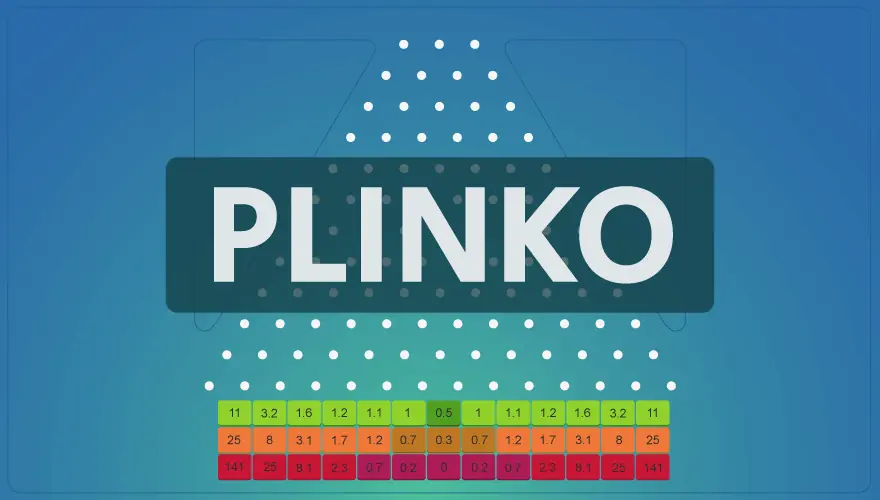
Another reason Plinko became noticeable is that it compresses a lot of gambling psychology into a very short cycle. The player is constantly balancing frequent smaller returns against the possibility of a rare high multiplier. That tension is not hidden behind elaborate themes or cinematic animations. It is visible in the payout layout itself. The center usually offers more common outcomes, while the edges hold the larger multipliers that appear less often. One glance at the board already tells an attentive player what kind of trade-off is ahead.
I would also note one practical detail that often gets overlooked: Plinko is one of the few casino formats where many players intuitively understand the shape of risk before they understand the math. They may not calculate distribution curves, but they immediately sense that the middle is safer and the edges are harder to hit. That makes the game accessible without making it meaningless.
How the Plinko board actually works in play
At Kats casino, the basic structure of Plinko follows the familiar model used across many online gambling platforms. The player chooses a bet amount, selects a risk profile, and in some versions may also adjust the number of rows. Then the ball is released from the top of the board. As it falls, each collision shifts it left or right until it reaches a payout segment at the bottom.
What matters here is not just the visual movement, but the distribution behind it. The board is designed so that central landing zones occur more often than the extreme outer zones. This is why low multipliers are typically clustered near the middle and the largest multipliers sit on the far sides. The game does not hide its structure. It openly tells the player that the biggest returns are tied to the least common outcomes.
That is the core mechanic in plain English: the more ambitious the multiplier, the less often the ball is likely to finish there. The board turns probability into a visible map. Mobile players should have a look at Aviator crash game checklist before installing anything.
| Element | What it does | Why it matters to the player |
|---|---|---|
| Bet size | Sets the value of each drop | Directly affects session cost and emotional pressure |
| Risk level | Changes the payout distribution | Can make results steadier or much more aggressive |
| Rows | Influence the path length and spread of outcomes | Often increases the contrast between common and rare results |
| Bottom multipliers | Determine the return for the landing slot | Show where frequent outcomes end and rare targets begin |
One of the most important things to understand is that the movement looks organic, but the session experience is shaped by the selected setup. A low-risk board usually compresses the payout spread. That means more modest results, fewer dramatic swings, and a more even rhythm. A high-risk board stretches the spread wider. The center may return less often at useful levels, while the edges become more attractive but much harder to hit. The interface still looks minimal, yet the emotional profile of the session changes a lot.
This is where Plinko becomes more than a novelty. It lets the player alter not just the possible payout, but the entire texture of the session. That is unusual. In many slots, volatility is fixed by the developer and the player simply accepts it. In Plinko, the player often participates in choosing the style of variance before the first drop.
Why the session rhythm feels different from most casino formats
The tempo of Plinko is one of its defining strengths. A round resolves quickly, but not instantly. That small delay is important. The ball’s descent creates a short suspense window, which is long enough to build expectation and short enough to keep the session moving. It sits in a very specific middle ground between a slot spin and a live game decision.
In practical terms, this means Plinko can become either a controlled, repetitive experience or a very fast drain on bankroll discipline. Because each round is simple, players tend to underestimate how many rounds they can complete in a short period. There is no long feature sequence to slow things down. No need to read cards. No waiting for a wheel. Just repeat, observe, repeat again.
This is one of the most memorable things about the format: Plinko often feels lighter than it really is. The interface is clean, the animation is short, and the action looks harmless. But session speed can be deceptively high, especially when autoplay or rapid dropping is available. A player may think in terms of individual low-cost rounds while the total outlay grows much faster than expected.
That is also why the game works so well for some players and poorly for others. If you enjoy fast feedback and like seeing probability play out over many short rounds, Plinko can be highly engaging. If you need layered features, narrative themes, or changing bonus states to stay interested, the format may start to feel repetitive once the novelty of the bouncing ball wears off.
Risk levels, probabilities, and what they mean in a real session
Risk level is not a cosmetic option in Plinko. It is the setting that most directly changes how the game behaves. Low risk tends to produce a tighter result range. You are more likely to see smaller multipliers appear with relative frequency, and less likely to experience long stretches chasing rare outcomes. High risk does the opposite. It makes the board more top-heavy, with attention shifting toward infrequent but potentially much larger multipliers.
Players often make a mistake here. They assume high risk simply means “better rewards.” That is too simplistic. High risk changes the shape of expectation, not just the ceiling. In practice, it can lead to longer dry patches, sharper bankroll swings, and a stronger emotional reaction to near-misses and missed edges. The larger multiplier is not a bonus upgrade. It is the visible end of a much harsher distribution.
To understand Plinko properly, it helps to think in terms of outcome spread rather than single-round excitement. A board with a broad spread can produce a session where many rounds return little or nothing meaningful, while a small number of drops account for most of the value. A narrower spread can feel less dramatic, but often gives a smoother run and a clearer sense of control.
Low risk: better for players who want steadier pacing and less violent balance movement.
Medium risk: a compromise between regular smaller returns and occasional stronger hits.
High risk: suited to players who accept that long unremarkable stretches may be the price of rare standout outcomes.
Another practical observation: Plinko can create a misleading sense that the next big multiplier is somehow “due” after a run of ordinary drops. It is easy to fall into that mindset because the board is visual and every path looks like a fresh near-miss story. But each drop should be treated as its own event. The board invites pattern-reading, while the logic of the game does not guarantee that patterns mean anything useful.
What a player should understand before launching Kats casino Plinko
Before starting a session, I would focus on four things: stake size, risk setting, pace, and expectation. These are more important in Plinko than many newcomers realise. Since the rounds are fast and the format is very easy to repeat, even a modest stake can add up quickly over time. A player who would be cautious with spin speed in slots should apply the same caution here.
The second point is expectation. Plinko is not designed to deliver the same kind of layered progression found in feature-heavy slots. There are no expanding story arcs, no free-spin chase in the usual sense, and no complex bonus ladder. The appeal comes from repeated short decisions and visible randomness. If that is not the kind of engagement you enjoy, the game may feel too bare.
Third, the risk setting should match the purpose of the session. If the goal is to explore the format and understand its flow, lower settings usually reveal the logic more clearly. If the goal is to take occasional shots at larger multipliers, then higher settings may make sense, but only with the understanding that the balance curve will likely be rougher.
Finally, players should pay attention to how quickly they emotionally react to edge multipliers. Plinko has a peculiar way of making the outer slots feel almost within reach. The ball can bounce toward a large multiplier and then drift back inward at the last moment. That visual tease is part of the experience, but it can also encourage impulsive repetition. A calm player sees variance. An impatient player sees missed opportunity and starts chasing it.
How Plinko differs from slots and other mainstream casino games
The most obvious difference between Plinko and classic slots is structural. Slots usually rely on reels, paylines, symbols, and bonus sequences. Plinko strips all of that away. There is no symbol evaluation, no feature trigger to wait for, and no thematic layer carrying the session. Instead, the game reduces everything to trajectory and landing position. To understand the wagering rules behind each offer, open Kats Casino free chips before making a deposit next.
That changes the player’s relationship with the outcome. In a slot, many results feel hidden inside the spin engine until the reels stop. In Plinko, the result unfolds in front of the player. Even though both formats are driven by chance, Plinko feels more transparent because the path is visible. That perceived transparency is one of the reasons some players find it easier to engage with than a dense video slot.
Compared with roulette, Plinko is less about choosing a betting field and more about accepting a probability curve chosen through settings. Compared with blackjack, there is no strategic decision-making once the round starts. Compared with crash games guide for Kats Casino accounts, there is no cash-out timing pressure. The tension in Plinko comes from setup rather than intervention. You define the conditions, then watch the logic play out.
| Format | Main appeal | How Plinko differs |
|---|---|---|
| Classic slots | Features, symbols, bonus rounds | Plinko is more minimal and more visibly probability-driven |
| Roulette | Betting variety and table logic | Plinko offers less betting complexity but more visual path suspense |
| Blackjack | Decision-making and skill perception | Plinko removes active strategy during the round |
| Crash games | Timing and nerve | Plinko is about pre-set variance, not mid-round cash-out choices |
There is also a less obvious difference. Slots often disguise repetition with theme changes, symbol sets, and feature packaging. Plinko has nowhere to hide. If you enjoy the core loop, you will likely enjoy the game. If you do not, no visual layer will rescue it. In that sense, Plinko is one of the most honest casino formats available.
Where Plinko performs well and where its limits become obvious
The strongest side of Plinko is clarity. I can explain the basic idea to a new player in less than a minute, and they will usually understand what is happening by the second or third drop. That low barrier to entry is valuable. It makes the game accessible without flattening the experience entirely.
Another strength is control over session style. The ability to choose a lower or higher risk profile gives players a more direct hand in shaping how the session feels. That does not create an advantage over the house, but it does create a more intentional experience. Players can decide whether they want a smoother sequence or a more aggressive distribution.
The game also performs well in short sessions. If someone wants quick rounds without learning table rules or dealing with feature complexity, Plinko is efficient. It is easy to test, easy to pause, and easy to understand in demo-style exploration where available.
Its limitations are just as clear. First, repetition arrives quickly for some players. Because the core loop barely changes, the format depends heavily on whether the player finds probability itself interesting. Second, the visual simplicity can create false confidence. A basic interface does not mean basic bankroll impact. Third, high-risk settings can produce a very uneven experience that feels harsher than newcomers expect.
I would add one more observation that often separates experienced players from casual ones: in Plinko, boredom and overconfidence can appear in the same session. That is unusual. A player may start treating the game casually because the rounds look simple, then increase pace or stake without noticing that the variance profile remains unforgiving. The game’s clean design can make discipline feel less urgent than it really is.
Who is likely to enjoy this format and who may not
Kats casino Plinko is a good fit for players who like short rounds, direct cause-and-effect structure, and a visible representation of chance. It also suits those who prefer to choose a session profile themselves rather than accept a fixed volatility model. If you enjoy testing how different settings change the feel of play, Plinko has genuine appeal.
It may also work well for players who find modern slots too cluttered. There are no overloaded interfaces, no dense paytables to decode, and no need to track multiple modifiers. The game gets to the point quickly.
On the other hand, players who want strategic decisions during each round may find the format too passive. Those who enjoy narrative themes, progressive features, or long-form bonus anticipation may also lose interest. Plinko does not build toward a grand event. Its drama is concentrated into each drop, not into a larger evolving structure.
Plinko may suit you if: you value speed, simplicity, and a clear risk-versus-reward framework.
It may not suit you if: you want skill input, feature depth, or a slower game with more decision layers.
That distinction matters because Plinko is often recommended too broadly. It is not automatically the right choice just because it is easy to understand. Ease of entry and long-term enjoyment are not the same thing.
Practical points to check before you start playing
Before launching a real-money session, I would suggest checking a few practical details rather than jumping in on instinct.
Look at the available risk settings and understand how sharply the payout spread changes between them.
Start with a stake that still feels comfortable after many repeated drops, not just after one or two.
Notice whether the game offers rapid play or autoplay, because these can accelerate spending without adding useful decision-making.
Pay attention to the multiplier layout at the bottom of the board, since it reveals the real shape of the session better than any promotional label.
If a demo mode is available, use it to compare low and high risk rather than using it only as a basic test of the interface.
The most important practical conclusion is simple: do not judge Plinko by its appearance alone. It looks casual, but the session profile can change dramatically based on settings. A low-risk run and a high-risk run may technically be the same game, yet they can feel like two different products in terms of balance movement, tension, and patience required.
Final verdict on Kats casino Plinko
Kats casino Plinko offers a very specific kind of gambling experience. It is clean, fast, and easy to grasp, but it is not as lightweight as it first appears. Its real appeal lies in how clearly it turns probability into something the player can watch unfold. The board makes variance visible. That is the game’s biggest strength.
For the right player, Plinko is compelling because it removes clutter and focuses attention on pure outcome distribution, session rhythm, and risk selection. It can work well for short bursts, for players who like quick feedback, and for those who prefer a direct format over feature-heavy slot design. It also gives players a more active role in shaping the style of the session through risk settings.
At the same time, caution is necessary. The speed of play can make spending feel smaller than it is. High-risk modes can create long unproductive stretches. The visual path of the ball can tempt players into reading meaning into near-misses that are better understood as part of the game’s random flow. And if you need strategic depth or evolving bonus structure, Plinko may feel too narrow over time. When the support team feels slow, Kats Casino blackjack guide explains the fastest ways to reach them.
My overall view is straightforward: Plinko is worth trying if you want a casino format built on visible probability, quick rounds, and adjustable session character. It is less suitable if you want richer mechanics, ongoing decision-making, or a slower and more layered experience. In other words, Kats casino Plinko does not promise everything. What it does offer, it offers clearly: a simple board, a sharp lesson in variance, and a gambling rhythm that can be either controlled or intense depending on how you choose to play it.
FAQ
How does the Plinko game round work?
A ball is released from the top and drops through pegs to land in one of the multiplier zones. The zone it stops in determines the payout for that round based on the stake.
What risk level should players expect from Plinko multipliers?
Plinko uses changing multipliers across different landing zones, so results can vary from round to round. The volatility depends on the selected stake and the multiplier distribution shown for the session.
Can Plinko be played in demo mode before real-money?
Yes, demo mode allows practice with virtual balance. Switching to real-money play keeps the same Plinko mechanics, but the stakes and outcomes reflect real-money rules.
Is Plinko launched from the game lobby, or directly from the Plinko section?
Either method may be available depending on the site layout. The Plinko game page typically includes a quick launch button, while the lobby groups casino games by category for faster browsing.
If the ball animation freezes in Plinko on mobile, what should be checked first?
Start by refreshing the game and switching the network if the connection is unstable. Clearing the browser cache or restarting the mobile browser/app can also help. After that, try launching Plinko again from the current game page to ensure the session loads correctly.
What should be confirmed before starting a real-money Plinko session?
Check the selected mode (demo or real-money), confirm the stake level, and review any on-screen rules for the round. It also helps to verify that the correct account currency is active before the first ball drop.
If a Plinko bonus or promo code is offered, where is it applied?
Any applicable code or welcome offer is handled through the bonus/promo area in the cashier section. After applying it, the active bonus should appear in the account or next to the game selection before starting Plinko.
Do Plinko limits change depending on deposit or withdrawal activity?
Limits can be affected by account status, payment method, and regional settings. Plinko stake limits and similar boundaries are shown for the current session, so it’s best to review the limit panel right before placing a ball.
Why might the Plinko game request verification after logging in?
Some actions, including real-money play and account operations tied to cashouts, may require identity verification. When verification is pending, the site may restrict certain features until the account is confirmed.
What should players know about choosing stake size in Plinko?
Higher stakes increase the size of the potential win and also the impact of losing rounds. The multiplier outcome is tied to the zone where the ball lands, so keeping an eye on the stake selector helps manage session risk.
Where can Kats players see updated Plinko rules and session details?
The Plinko game page shows the round info for the current session, including any mode-specific notes. For updates that affect balance or access, checking the account and cashier panels helps confirm the latest status.
What common mistake causes Plinko results to feel unexpected?
Players sometimes switch between demo mode and real-money mode without noticing, which changes how balance is handled. Another frequent issue is assuming the next round will use the previous stake after adjustments—always re-check the stake and mode before releasing the next ball.